

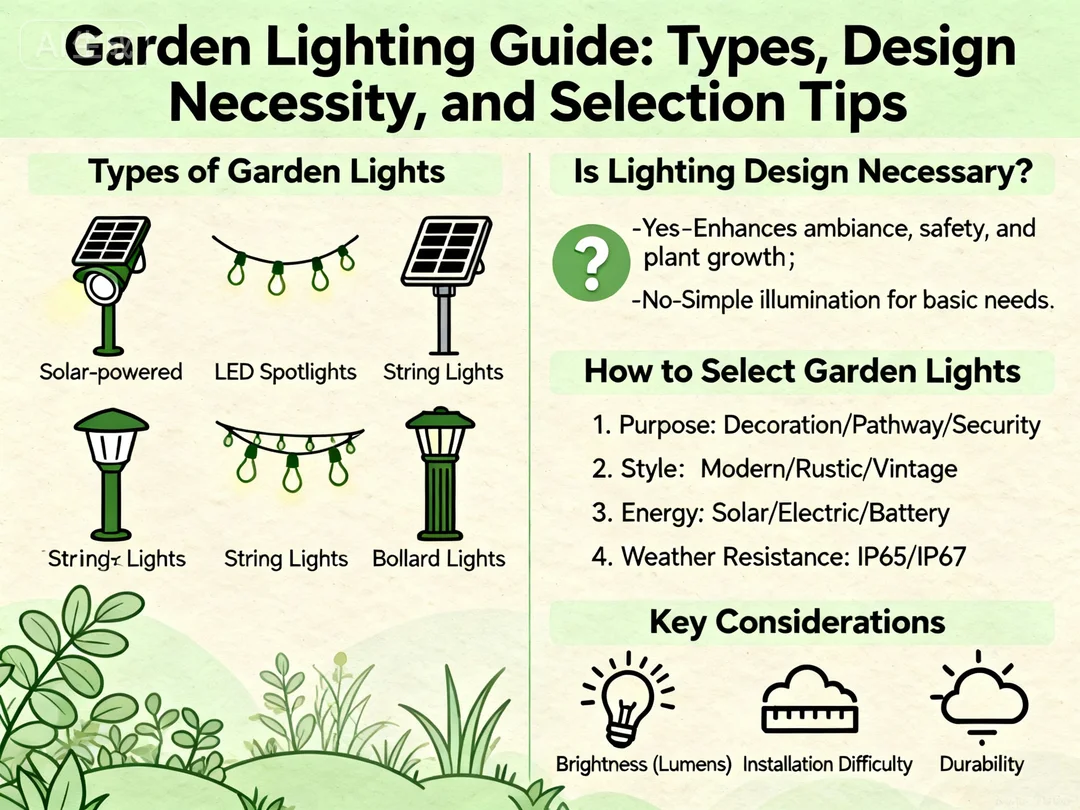
Pedestrians walking at night, cars driving through the darkness, even grandmothers dancing outdoors in public squares—courtyard lights are ubiquitous in every corner of the city. As a type of outdoor lighting fixture, courtyard lights are primarily used for illuminating public spaces such as urban slow lanes, narrow roads, residential communities, tourist attractions, parks, and plazas. Do you know how courtyard lights are designed? What are the classifications of outdoor lighting fixtures?
What Are Courtyard Lights?
Widely deployed along one or both sides of roads in urban slow lanes, narrow streets, residential communities, tourist attractions, parks, plazas, private gardens, and courtyard corridors, they illuminate pathways to enhance nighttime safety, extend outdoor activity hours, and protect lives and property. They also uplift moods, elevate spirits, and reshape perceptions by crafting a nighttime palette of light and shadow.
Design Requirements for Garden Lights
- Lighting fixtures within the same project—including high-mast lights, garden lights, bollard lights, and wall sconces—should maintain consistent style and design.
- For residential pathways, select fixtures with appropriate heights based on site conditions and scale.
- While garden lights offer diverse light source options, energy-saving lamps remain a favorable choice after comprehensive evaluation.
Courtyard Light Installation Notes
Light Source
Low-power, high-color-rendering options such as high-pressure sodium lamps, metal halide lamps, high-pressure mercury lamps, and incandescent bulbs are recommended.
Junction Box
The waterproof sealing gasket on the cover of the fixture’s junction box or fuse box must be fully installed. Streetlights mounted on overhead line poles must be correctly positioned, securely fixed, with all fasteners present and tightened. Each fixture should be equipped with fuse protection.
Overhead Lines
Streetlights mounted on overhead line poles must be correctly positioned, securely fixed, with all fasteners present and tightened. Each fixture should be equipped with fuse protection.
Grounding
Grounding wires shall be installed as separate trunk lines. These trunk lines shall be arranged along the courtyard lights to form a ring network. Grounding trunk lines shall connect to the grounding device’s outgoing trunk lines at no fewer than two points.
Power-On Operation
After lamp installation is complete and passes insulation testing, power-on trial operation is permitted. Following power-up, conduct thorough inspections and patrols to verify that lamp controls operate flexibly and accurately.
Selecting Garden Lighting Fixtures
Appropriate Fixtures
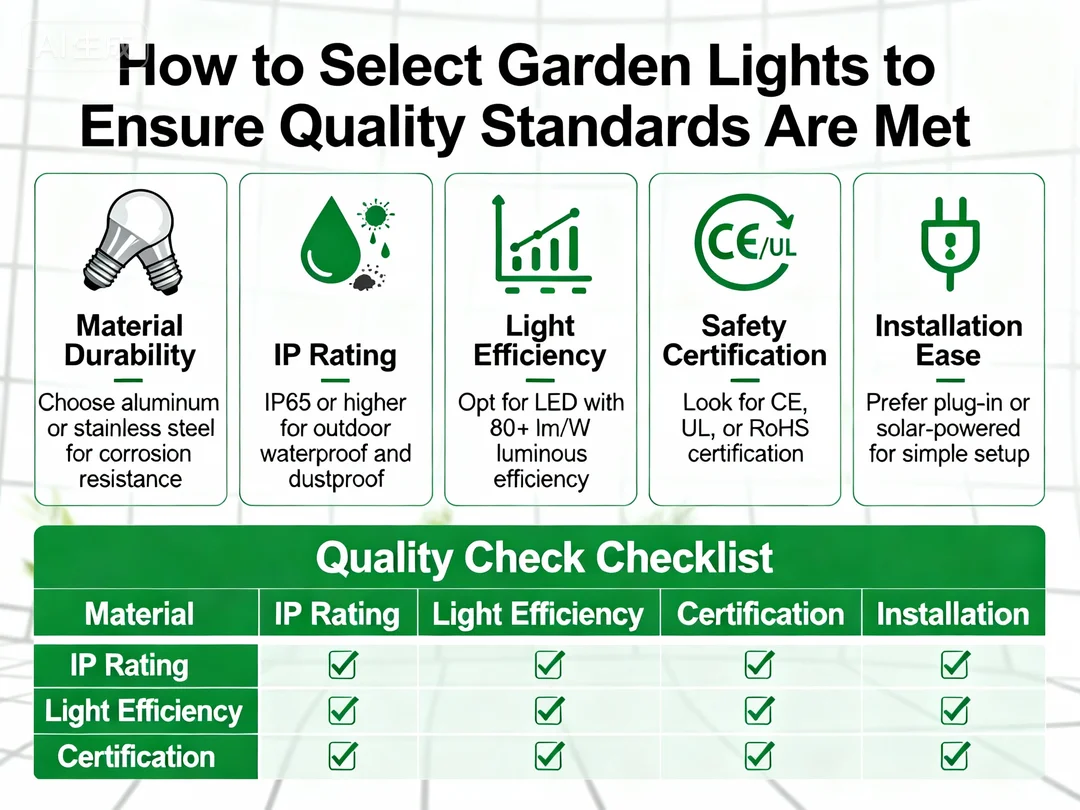
Select fixtures with optimal light distribution that can be adjusted according to the specific lighting requirements of the area. High-efficiency fixtures not only meet visual illumination needs but often exceed them, making them suitable for open spaces.
Installation and Maintenance
For general users, opt for fixtures that are easy to install and maintain, as these also tend to be more cost-effective. For locations with special requirements—such as fire-prone or corrosive environments—select fixtures specifically designed for those conditions.
Types
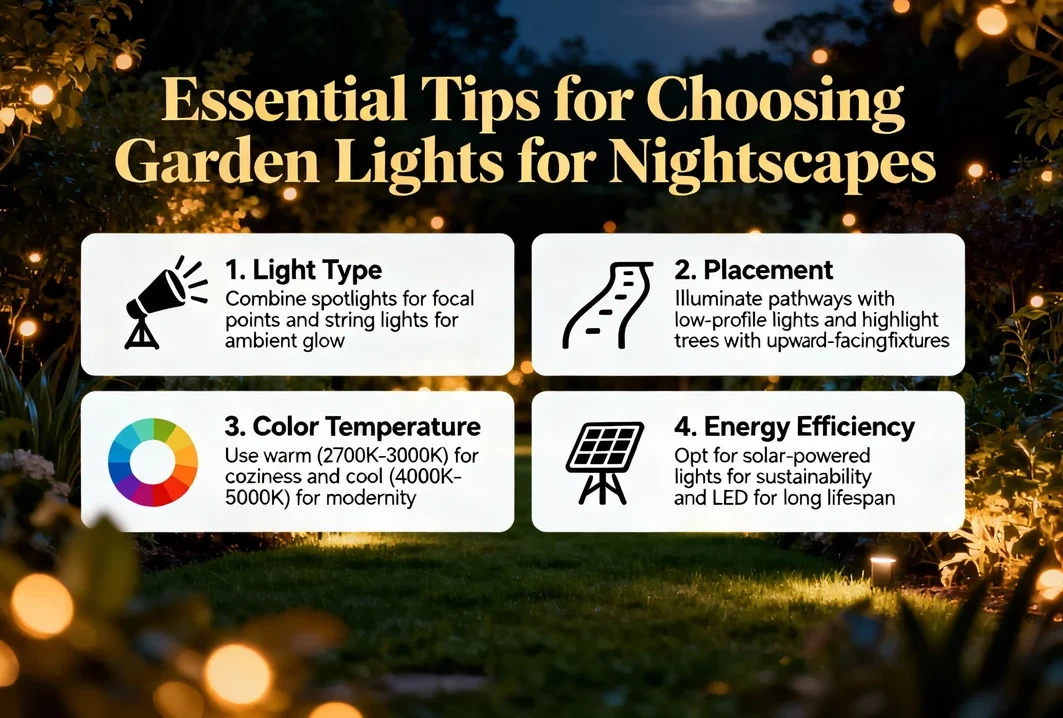
There are numerous types of garden lights available; selecting based on your specific needs is most appropriate. When selecting garden lights, consider the characteristics of the light source and the features of your architectural design. This ensures greater convenience in use and better harmony with the surroundings.
Light Pole Material
If customers prefer a European style, cast aluminum or cast iron is recommended. If durability and quality are priorities, steel-based garden lights are the definitive choice.
Garden Light Cleaning and Maintenance
-
- Landscape garden fixtures tend to accumulate dust. Clean them with a damp cloth, wiping in one direction only. Avoid back-and-forth scrubbing and use moderate pressure, especially when handling chandeliers and wall sconces.
- For internal cleaning or bulb maintenance, turn off the power first. Remove bulbs individually for wiping. If cleaning directly on the fixture, avoid rotating the bulb clockwise to prevent over-tightening and potential socket damage.
- Enhance training for maintenance personnel. Education must improve their understanding of garden light maintenance and strengthen their sense of responsibility.
- Urban expansion increases both the number of garden lights and service areas, significantly boosting maintenance workload. Without adding staff, continuously improve and update maintenance equipment to enhance efficiency.
- Establish a tiered maintenance accountability system based on designated management zones, assigning specific personnel, posts, and responsibilities. Implement regular inspections and scheduled maintenance, with clear accountability for any issues that arise.
- Accelerate the development of regulatory documents for garden light management to establish a legal framework. Simultaneously, collaborate with urban management departments to strengthen enforcement efforts, strictly penalize acts of vandalism against garden light facilities, and ensure their proper operation.
Leave your comment
Related posts
When it comes to garden lights, their frequent use and […]
Garden lights are the primary equipment for creating nighttime illumination […]
